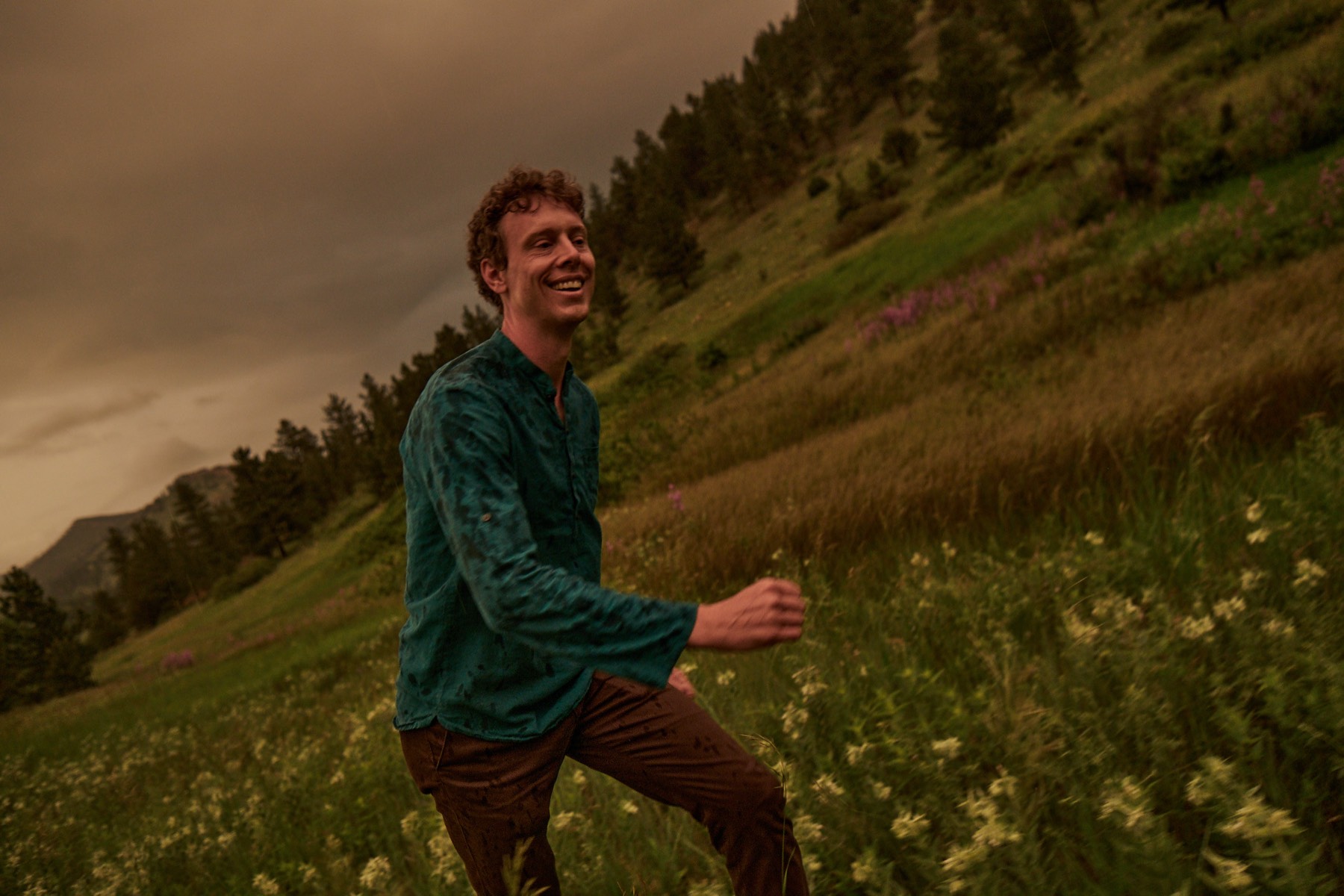
Mark Andreas walking away through tall grass toward the mountains at dusk.

Metaphors of Movement · Boulder, Colorado

The metaphors we live by are literal — and they can be moved.

“Stuck.” “Weighed down.” “Boxed in.” “Backed into a corner.” These aren’t just figures of speech — they’re the body’s own map of a pattern. Metaphors of Movement takes that map seriously, works with it in space, and lets the pattern shift. Mark Andreas is the trainer who teaches it.

01

The method, made visible

How Metaphors of Movement works

Listen to how anyone describes a stuck place and you’ll hear it: a position, a weight, a wall, a direction. The method takes the person’s own metaphor at its word — then explores it in physical space until something can move. Here’s the shape of it.

  1. Step 1

    The metaphor

    A phrase arrives in ordinary language — already spatial, already physical.

  2. Step 2

    Its position

    We locate it as a place in space — where it sits, how it holds, what surrounds it.

  3. Step 3

    The movement

    Working with the metaphor, a new move becomes possible — a step, a turn, a setting-down.

  4. Step 4

    The shift

    The pattern reorganises around the new position — and the felt sense changes with it.

A few of the metaphors people bring — and the kind of movement each invites:

  • “weighed down”set the weight down
  • “boxed in”find the edge, step out
  • “at a crossroads”choose a road and walk it
  • “going in circles”break the loop, take a heading
  • “hitting a wall”turn, climb, or find a door
  • “treading water”reach ground, or swim somewhere

Illustrative only. The work explores whatever metaphor a person actually brings — it doesn’t prescribe the move or promise a particular outcome.

Metaphors of Movement was originated by Andrew T. Austin. Mark Andreas trains the method — see how their paths connect below.

02

Why it’s different

It works below talk — in the body’s own spatial language

Most approaches try to reason with a stuck pattern: analyse it, argue with it, push against it. But the language already tells you where the pattern lives — and it isn’t in the realm of logic.

  • The metaphor is the data. When someone says they’re “backed into a corner,” that corner has a shape, a direction, a way out. The method works with it directly.
  • Movement, not insight. You don’t talk your way out of a wall — you turn, you climb, you find the door. Change happens as a felt, spatial shift.
  • Honest and led by the person. The work follows the metaphor each person brings, at their pace. Nothing is imposed; nothing is promised in advance.
Mark Andreas mid-stride through a meadow beneath a dramatic stormy sky, smiling.
Movement is the point — not a metaphor for it.
03

Mark & Metaphors of Movement

The person to learn it from

Metaphors of Movement was developed by Andrew T. Austin. Mark Andreas was in the room for some of its earliest presentations — in Colorado, in 2009, when Andreas NLP hosted Austin — and has trained with him almost every year since.

That long apprenticeship is rare. It’s why Metaphors of Movement is Mark’s signature method and his own distinct lane: he has watched it grow at the source and carried it into his own practice with more than a thousand clients. When he teaches it, he’s teaching from the inside.

Today Mark trains Metaphors of Movement Levels 1 & 2 — in person and online — for coaches, change-workers and anyone drawn to working this way.

  1. 2009

    Present at the method’s earliest presentations in Colorado, hosted by Andreas NLP.

  2. Since

    Trained with Andrew T. Austin almost every year — a continuous, source-level apprenticeship.

  3. Now

    Trains Metaphors of Movement Levels 1 & 2, in person and online.

04

His wider practice

Two more methods of deep change

Alongside Metaphors of Movement, Mark trains and practices two further approaches — each working with automatic experience in its own way.

Core Transformation

Developed by Connirae Andreas

A gentle, deep process that takes an unwanted feeling or behaviour down through its positive purposes to a “Core State” — wholeness, peace, being, love. Mark co-designed the Core Transformation Coach Certification.

The Wholeness Work

Developed by Connirae Andreas · a.k.a. Coming to Wholeness

A subtle process working with the sense of self — “the I” — to dissolve reactive patterns at a deep level. Mark’s work also draws on classical NLP and Self-Concept work.

05

Work with Mark

Four ways to bring this work to your life or stage

01

Trainings & Workshops

Metaphors of Movement — Levels 1 & 2, in person and online.

Also Core Transformation, Advanced Core Transformation, the Core Transformation Coach Certification and the Wholeness Work. Learn the methods properly, from someone who trains them at the growing edge of the field.

Explore trainings →
02

Talks & Presentations

Keynotes, conference talks and guest presentations — substantive, warm and accessible to a general audience.

Invite Mark to speak →
03

1:1 Coaching

Private change-work sessions worldwide via Zoom or in person — personal and business / executive coaching.

Book a discovery call →
04

Podcast Guest

Available as a podcast guest — thoughtful conversation on deep change, metaphor, conflict and the methods Mark teaches.

Request a booking →
06

Credibility

Backed by research, proven in practice

3

Published studies — including two randomized controlled trials — support the methods Mark trains.

17+

Years in full-time practice as a change-work practitioner and trainer.

1,000+

Clients worldwide, in person and via Zoom — sessions tailored to each person.

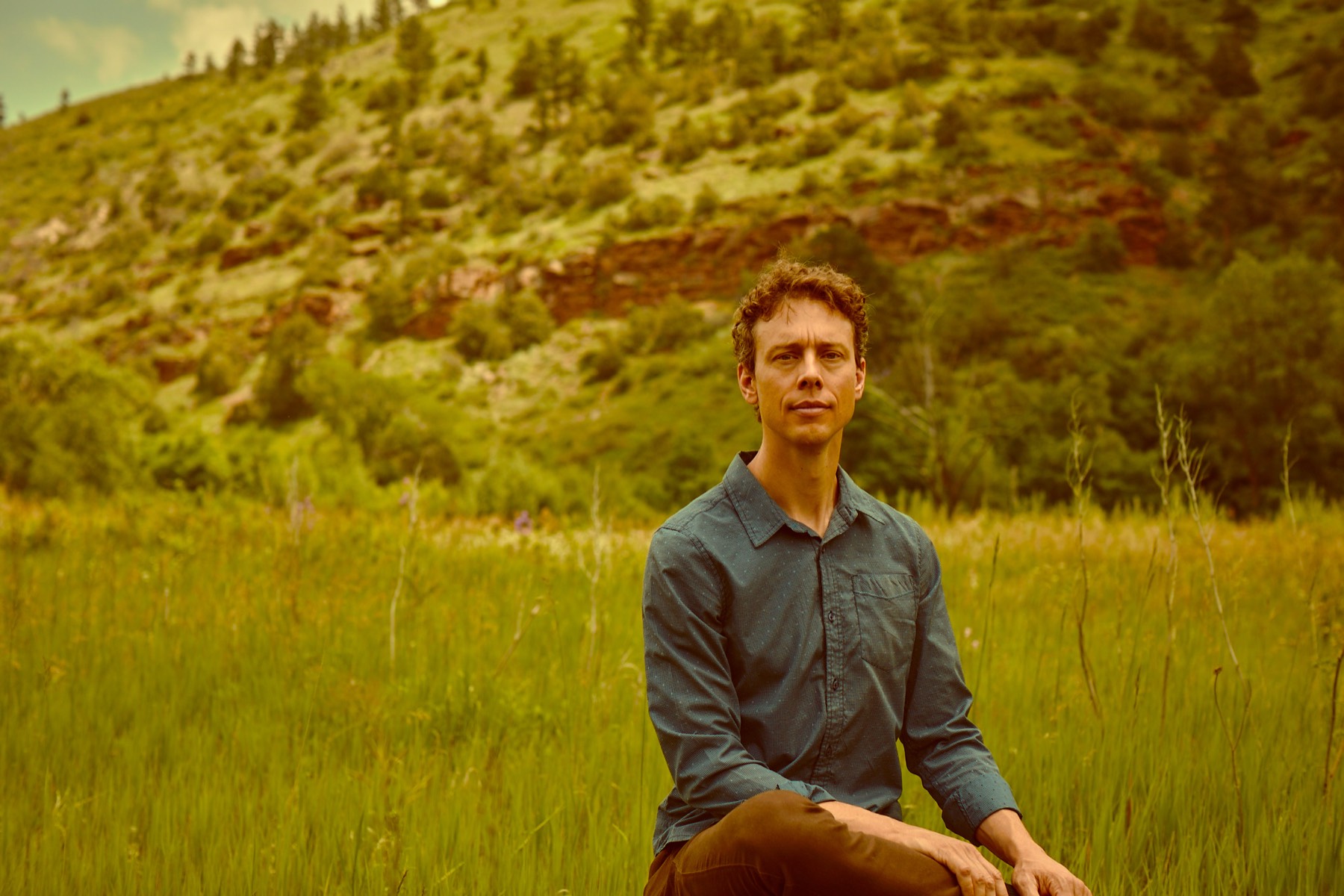
Mark Andreas seated in a meadow, a red-rock hillside behind him, calm and contemplative.
07

About Mark

A practitioner, on his own ground

Mark learned the family methods — Core Transformation, the Wholeness Work, Self-Concept work and more — directly from his parents, Steve & Connirae Andreas, pioneers of the NLP field. NLP is the heritage; the work has grown beyond it, and so has Mark.

He holds an undergraduate degree in Peace & Global Studies (Earlham College), and began his career leading groups of at-risk teens on three-week wilderness backpacking expeditions — individual therapy and group process, round the clock — at the Monarch Center for Family Healing.

Today he co-sponsors Andreas NLP Trainings with his mother Connirae and trains internationally, from his home in Boulder, Colorado, where he lives with his wife Catherine and their son.

08

The author

Books by Mark Andreas

Sweet Fruit from the Bitter Tree

Sixty-one true stories of creative and compassionate ways out of conflict — ordinary people meeting hostility with imagination instead of force.

Endorsed by Dan Millman and William Ury.

Waltzing with Wolverines

Finding connection and cooperation with troubled teens — drawn from Mark’s years of wilderness therapy in the backcountry.

From the wilderness-therapy years.

In their words

What people say

“[placeholder] A short, specific testimonial — ideally describing the moment a stuck metaphor moved, and what changed afterward.”

[placeholder — client name & descriptor]

“[placeholder] A testimonial from a Metaphors of Movement training participant — what it was like to learn the method from Mark.”

[placeholder — training participant]

“[placeholder] A third testimonial — perhaps from a fellow practitioner or an organisation Mark has spoken for.”

[placeholder — name]
09

Let’s begin

Book a free discovery call

Tell Mark a little about what you’d like to change, or what you’re planning. There’s no cost and no pressure — just a clear, honest conversation about whether this work is a fit.

  • Based in Boulder, Colorado
  • Sessions Worldwide · Zoom or in person
  • Phone 303-810-9611
  • Address 1650 38th St #100e, Boulder, CO 80301

Demo form — not yet connected. Or call 303-810-9611.